

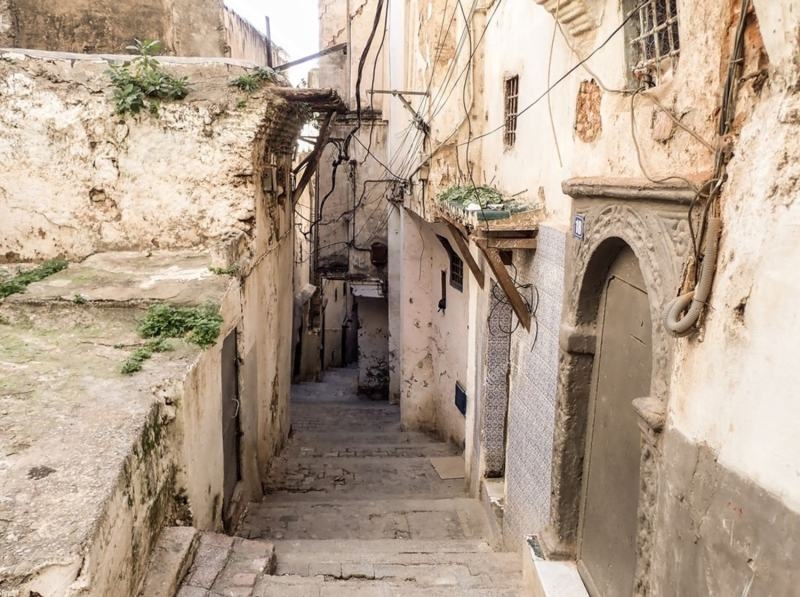
The Casbah stretches over the hills above the Mediterranean, and you really sense its position as you climb its alleys. Each corner brings a jumble of narrow lanes, whitewashed homes, mosques, centuries-old mansions, and street life that feels timeless. Generations have passed through here, and you can pick up traces of many cultures woven into the city’s fabric.
It’s not some frozen museum either—people live and work in these tangled streets. If you want to understand this place, you need to experience it firsthand, not just flip through photos online. That’s what this blog is about: the Casbah’s history, the sights you shouldn’t miss, practical tips, and a look at what to expect if you visit.
The Casbah of Algiers is an old hillside quarter overlooking the Mediterranean, where centuries of settlement remain visible in streets, homes, mosques, and palaces.
The Casbah Algiers history reaches back to antiquity. UNESCO records habitation in the area from at least the 6th century BC, when a Phoenician trading post existed here. Later came Roman, Arab, Berber, and other influences before Algiers developed under Ottoman rule.
The modern Casbah took shape in the 16th century, particularly after Ottoman-era Algiers developed as a major political and trading center. Its steep position forced the city to grow vertically and irregularly rather than in a neat grid.
That is important. The winding lanes were not designed as decoration; they respond directly to the hillside.
Casbah of Algiers architecture and history are closely connected. Traditional houses were built around internal courtyards, while terraces, narrow passages, and dense construction helped create privacy and adapt buildings to the difficult terrain.
Stone, wood, earthen materials, lime rendering, and decorative details appear across the historic fabric. Ottoman influences sit beside older Mediterranean and North African traditions, creating something that feels layered rather than uniform.
Don't Miss: 10 Best Places to Visit in Algeria for an Unforgettable Trip
The Casbah Algiers attractions are not limited to individual monuments; much of the interest comes from how buildings, lanes, and everyday life fit together.
Casbah Algiers' UNESCO status dates to 1992, when the historic quarter was inscribed on the World Heritage List under criteria related to architectural and urban influence and traditional human settlement.
The Casbah Algiers World Heritage Site covers about 54.7 hectares. It remains residential, with traditional houses, mosques, palaces, hammams, and souks forming part of the living urban environment. UNESCO has also continued to monitor conservation concerns and restoration work.
For anyone wondering what to see in the Casbah of Algiers, focus on the historic streets first, then the major buildings. The citadel area, old mosques, Ottoman palaces, traditional houses, and small commercial streets show different parts of the quarter’s character.
The Casbah Algiers attractions can be approached as a walking sequence rather than a checklist. Stop often. Look upward. Doorways, balconies, tiles, and courtyard layouts are easy to miss when moving too quickly.
The best things to do in Casbah Algiers are fairly simple. Walk its steep lanes, observe traditional architecture, visit accessible historic buildings, browse local shops, and take time around viewpoints facing the Mediterranean.
A useful approach is:
The Casbah is still home to a community, so the visitor experience should not treat it like an abandoned archaeological site.
Suggested Reading: Hidden Gems In Algeria Travel For Adventurous U.S. Visitors
This Casbah of Algiers travel guide works best for travelers who want history without turning the visit into a rushed monument tour.
Knowing how to visit the Casbah of Algiers matters because the quarter is steep, dense, and made up of irregular streets. Comfortable shoes are more useful than stylish ones here. Allow several hours instead of trying to squeeze everything into a short stop.
A guide can be particularly useful if you want deeper context on Ottoman architecture, local history, and less obvious buildings. Keep your route flexible; some spaces may have different access arrangements.
Why visit the Casbah of Algiers? Because its history is still embedded in the physical city. You are not simply looking at preserved walls. Homes remain homes, streets remain circulation routes, and historic buildings exist alongside ordinary urban life.
The Casbah of Algiers also shows how geography can shape architecture. The hillside determined movement, building density and views toward the sea. That relationship is one of its strongest features.
| Feature | Casbah of Algiers | Conventional historic museum |
|---|---|---|
| Experience | Outdoor living quarter | Controlled indoor setting |
| Architecture | Seen in its original urban setting | Often displayed separately |
| Movement | Steep lanes and irregular streets | Fixed galleries |
| Local life | Continues around heritage | Usually separated from exhibits |
| Best approach | Slow walking | Room-by-room viewing |
This difference explains much of the appeal. The Casbah of Algiers is a place to observe, not simply inspect.
For travellers interested in architecture, urban history, and Mediterranean culture, is the Casbah of Algiers worth visiting? Its value comes from the combination of landscape, living neighborhood, and historic architecture rather than one spectacular monument.
The Casbah Algiers UNESCO designation reinforces its international heritage importance, but the experience itself is more local and immediate. Some areas may feel worn or uneven. That is part of the current conservation reality, not something to disguise. UNESCO identifies earthquakes, fire, landslides, flooding, and uncontrolled interventions among ongoing risks.
Also Read: Djanet Travel Adventures in Southern Algeria’s Desert
Think of the Casbah not as a single attraction, but as a living city inside the city. Its Ottoman-era design, earlier roots, hilltop setting, and the everyday life happening now all make it so memorable. If you’re coming, here are the basics: wear good shoes, give yourself plenty of time, be mindful of the people who call this home, and don’t rush trying to “see it all.”
Sure, the UNESCO status is special, but nothing beats wandering those steep lanes yourself. Walking through the Casbah makes it all come alive in a way no official label really can. If you’re curious about history, architecture, or daily local life, this is where you feel it best in Algiers.
You can, but take care. Some streets get very quiet after dark and aren’t great for wandering alone—especially if you don’t know the area. Stick to daylight if it’s your first time.
There’s no single rule. Some places allow photos; others don’t. Always ask before you snap pictures, especially indoors, around residents, or in mosques—respect for privacy and custom goes a long way here.
In Algeria, folks speak Arabic and Algerian Arabic all the time. French is part of daily life for a lot of people too. English? Not so much—most people don’t use it or really get it.
Absolutely, but it’s a workout. The streets can be really steep and uneven, so kids might tire quickly. Break up your walk and don’t try to cover everything at once.
You can stroll the main streets in under an hour, but if you want to soak in the architecture and have time to explore, plan for a few hours. History buffs and photographers could easily spend longer.
This content was created by AI